Why Does Skin Lose Its Smoothness Over Time, and What Can Microneedling With Growth Factor Actually Fix?
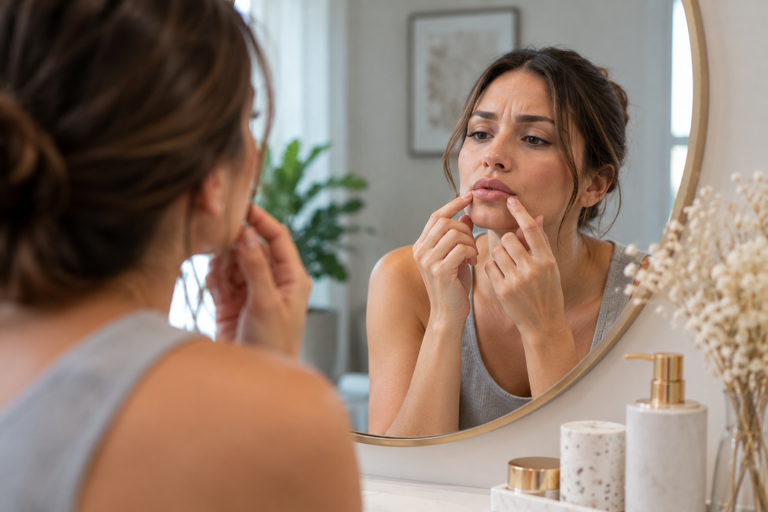
Uneven texture, enlarged pores, faint acne scarring, and a general loss of that smooth, bounce back quality in the skin are some of the most common concerns patients bring up during a consultation. Most people cannot pinpoint exactly when it started, only that their skin used to feel smoother and now it does not respond to moisturizer or makeup the way it once did. This is where microneedling with growth factor tends to come up as a solution, and for good reason, since it addresses the problem at a deeper level than most topical products ever could.
At Amani MedSpa in St. Petersburg, Florida, this treatment is one of the more frequently requested services for patients dealing with texture irregularities, acne scarring, and the early signs of collagen decline. This guide breaks down what actually causes skin texture to change, why growth factors make such a difference, and what the treatment experience looks like from start to finish. Updated for September 2026 with the latest treatment protocols offered at our St. Petersburg location.
What Causes Skin Texture to Change in the First Place?
Skin texture is largely determined by collagen and elastin production, cell turnover rate, and the health of the outer skin barrier. As we age, several things happen at once. Collagen production slows down, typically beginning in the mid to late twenties and continuing at a steady decline afterward. Cell turnover slows, meaning dead skin cells sit on the surface longer instead of shedding naturally. Sun exposure, a near constant factor for anyone living in Florida, breaks down existing collagen and accelerates these changes even further.
The result is skin that looks less even, feels rougher to the touch, and shows enlarged pores, fine lines, or old acne scarring more visibly than it used to.
What Skin Concerns Does Microneedling With Growth Factor Actually Address?
Acne Scarring and Textural Irregularities
Acne scars form when the skin's healing process creates uneven collagen deposits, leaving behind shallow depressions or raised texture. Because microneedling creates controlled micro channels in the skin, it triggers the body's natural healing response, encouraging fresh, organized collagen to form in areas that previously scarred unevenly.
Enlarged Pores
Pores often appear larger as surrounding skin loses firmness and structure. Rebuilding collagen support around the pore can visibly tighten its appearance over time.
Fine Lines and Early Signs of Aging
Repetitive facial movement combined with slowing collagen production leads to fine lines, particularly around the eyes, mouth, and forehead. Growth factor microneedling supports the skin's structural rebuilding process, which can soften these lines gradually.
Dullness and Uneven Tone
When cell turnover slows, skin can look tired or uneven even without a specific condition like scarring or pigmentation. Microneedling encourages fresher skin cells to surface more quickly, often giving the skin a brighter, more refreshed appearance.
How Is Microneedling With Growth Factor Different From Standard Microneedling?
Traditional microneedling relies on the needling process alone to stimulate collagen production. Adding growth factors, whether through topical serums or the patient's own concentrated plasma, introduces proteins that actively signal skin cells to repair and regenerate more efficiently. Think of the microneedling as creating the opportunity for renewal, and the growth factors as accelerating and reinforcing that process. Many patients find this combination delivers more noticeable results in fewer sessions compared to microneedling alone.
At Amani MedSpa, our microneedling with growth factor treatment is often discussed alongside our growth factor therapy using PRP and PRF, which uses a patient's own plasma to support the skin's healing response. For patients who prefer a peptide based approach instead, we also offer microneedling with peptides as an alternative option.
Who Is a Good Candidate for This Treatment?
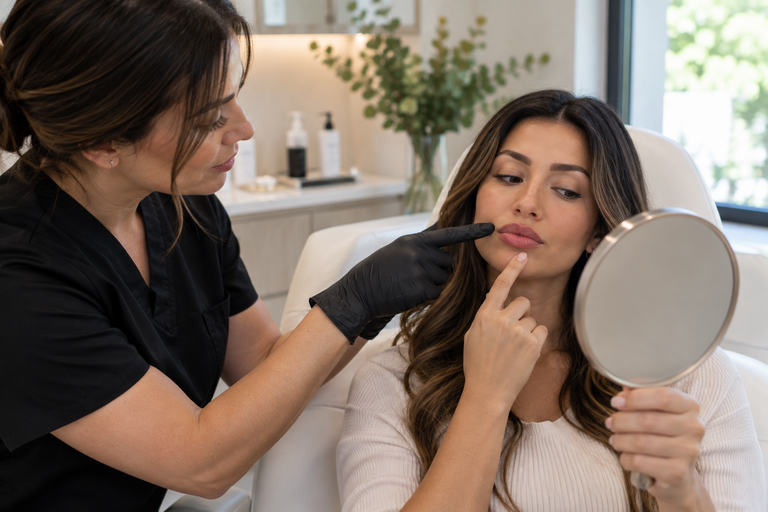
Most patients dealing with acne scarring, uneven texture, enlarged pores, or early fine lines are reasonable candidates. It tends to work especially well for people who have tried topical products without significant improvement and are looking for a more active approach to rebuilding skin quality. As with any skin treatment, active acne breakouts, certain skin conditions, or recent sun damage may require a short waiting period before treatment, which is something our team reviews during your consultation.
What Does a Microneedling With Growth Factor Appointment Involve?
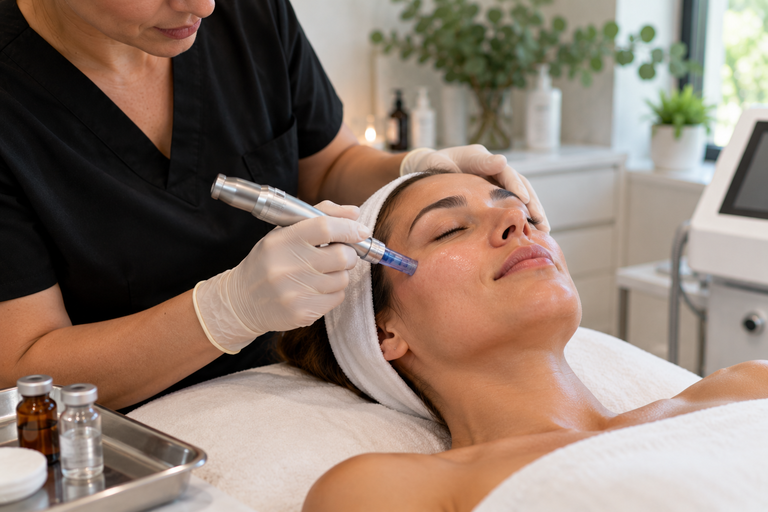
A typical session begins with a thorough skin cleanse, followed by a topical numbing period to keep the treatment comfortable. The microneedling device is then used to create controlled micro injuries across the treatment area while growth factors are applied to support the healing response. Most appointments take about 45 minutes to an hour. Afterward, skin typically appears pink or flushed for a day or two, similar to a mild sunburn, with results building gradually over the following weeks as new collagen forms.
How Many Sessions Are Usually Needed?
Results depend on the concern being treated, but most patients see the best outcomes with a series of three to four sessions spaced several weeks apart. Because collagen remodeling is a gradual biological process, improvements continue to develop for weeks after each session, which is why a series tends to outperform a single treatment for concerns like acne scarring or significant texture irregularities.
Seeing Your Skin's Trajectory Before You Commit
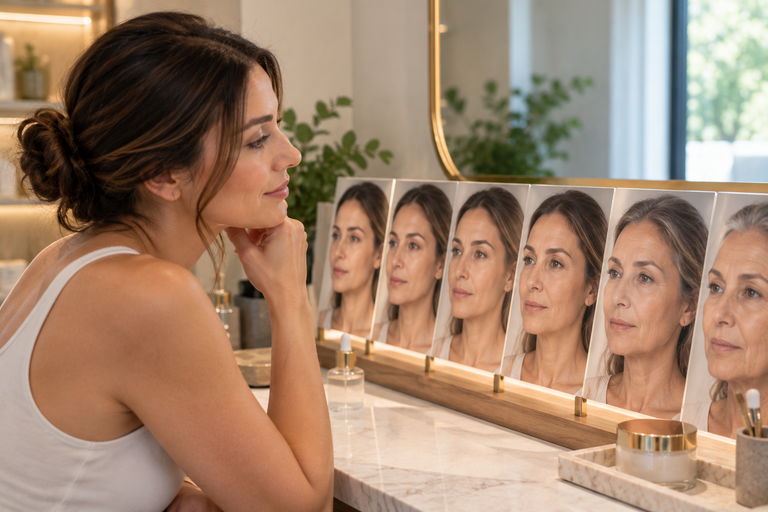
One question we hear often is how a patient can know whether a treatment like this is worth the investment before they start. This is part of why Amani MedSpa offers Ageless AI, a facial analysis feature that helps patients visualize how their skin may change over time and how proactive treatment can influence that trajectory. You can try the complimentary Ageless AI pre scan to get a clearer, more personalized picture before booking, which many patients find helpful when deciding between treatment options like microneedling, HydraFacial, or a combination approach.
Frequently Asked Questions
Does microneedling with growth factor hurt? Most patients describe mild discomfort at most, since a topical numbing cream is applied before treatment. Any sensitivity typically fades shortly after the session ends.
How long is recovery after treatment? Most patients experience redness similar to a mild sunburn for one to two days, with normal makeup application usually possible within 24 to 48 hours depending on skin sensitivity.
Can this treatment help with old acne scars, or only recent ones? It can be effective for both, though results vary depending on the depth and age of the scarring. A consultation is the best way to set realistic expectations for your specific skin history.
Is microneedling with growth factor better than a HydraFacial for acne scars? They address different layers of the skin. HydraFacial focuses on surface hydration, exfoliation, and extraction, while microneedling with growth factor works at a deeper level to rebuild collagen. Many patients in St. Petersburg use both as part of a broader skincare plan, and our team can help determine the right combination for your goals.
Ready to Give Your Skin a Reason to Behave?
Texture concerns rarely resolve on their own, but they respond well to treatment that works with your skin's natural repair process rather than against it. If you have been dealing with acne scarring, rough texture, or skin that just does not look as smooth as it used to, the team at Amani MedSpa in St. Petersburg, Florida can walk you through whether microneedling with growth factor is the right fit. Book a consultation to get started, or browse our full list of skincare treatments to see how this service fits into a broader plan for your skin.