
Can Sensory Deprivation Float Tanks Quiet an Overstimulated Mind? A Valrico Guide to Floating
Updated October 2026
Think about the last time your brain had nothing to process. No notifications, no traffic on State Road 60, no background TV, no inbox pinging at 9 p.m. For most people in Valrico, Brandon, and the rest of eastern Hillsborough County, that moment is hard to remember. Our nervous systems were never designed to run at full volume all day, and many of us feel it as racing thoughts, shallow sleep, tight shoulders, and a constant low hum of tension.
That is exactly why sensory deprivation float tanks have moved from niche wellness trend to a regular part of so many self-care routines. At Amani MedSpa in Valrico, floating is one of the simplest ways to give your mind and body a true break. Below, we answer the questions people ask most before trying it for the first time.
What Is Sensory Overload, and Why Does It Feel So Exhausting?
Sensory overload happens when your brain receives more input than it can comfortably sort through. Light, sound, screens, conversations, and even the feel of clothing all compete for attention. Over time, that steady stream keeps your stress response switched on.
What are the common signs of an overstimulated nervous system?
You might notice:
- Trouble falling asleep even when you feel tired
- Irritability over small noises or interruptions
- Jaw clenching, neck tightness, or tension headaches
- Feeling "wired but tired" by midafternoon
- Difficulty focusing on one task for more than a few minutes
Why does chronic stress show up in the body?
When stress hormones like cortisol stay elevated, muscles hold tension, sleep becomes lighter, and recovery slows down. Stress can even show up on your face as dullness, breakouts, and deeper expression lines, something we explore in our post on how stress impacts your skin.
What Are Sensory Deprivation Float Tanks?
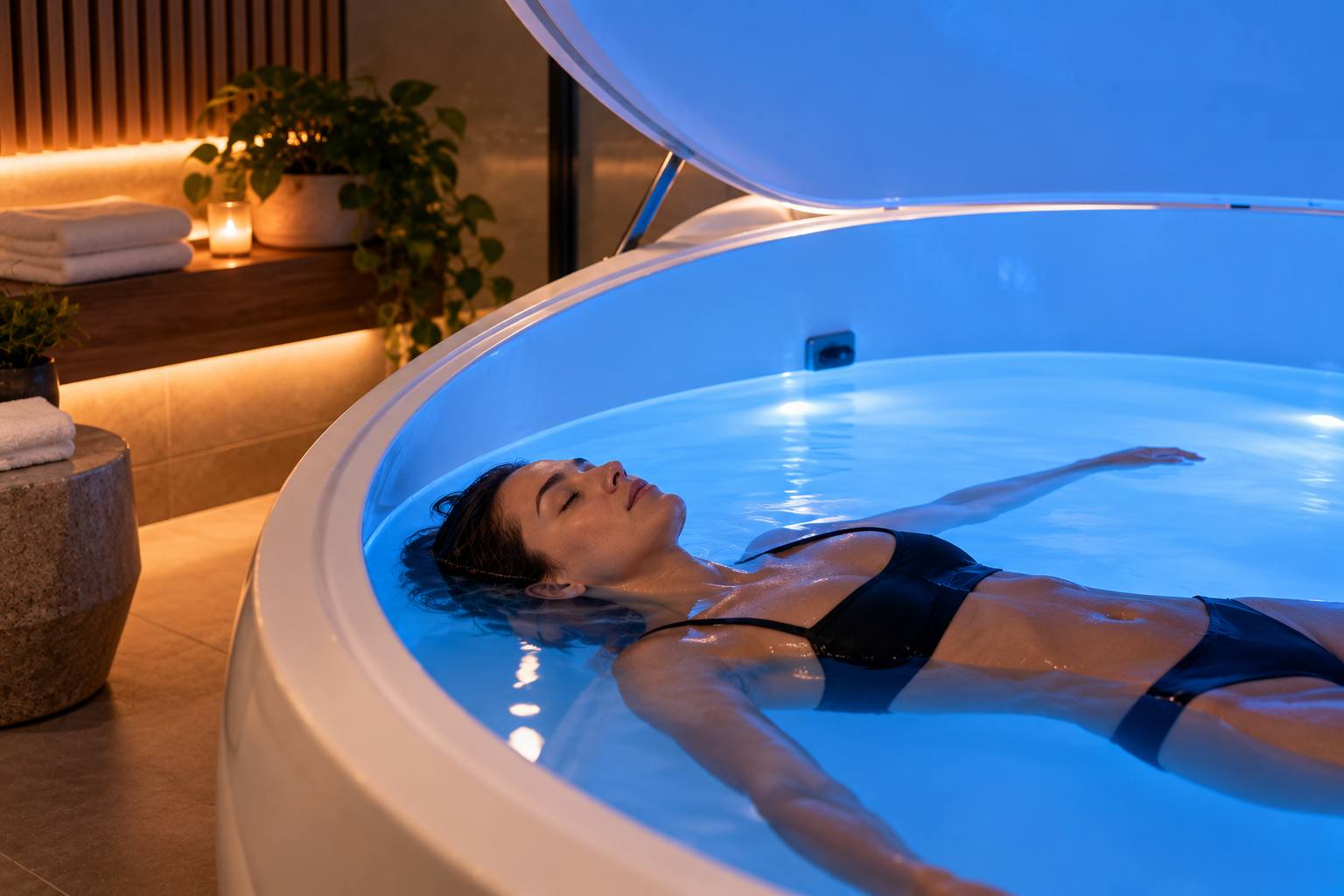
A float tank, sometimes called a float pod or isolation tank, is an enclosed chamber filled with about a foot of water saturated with Epsom salt. The high salt concentration makes you completely buoyant, so you float effortlessly on your back. The water is kept close to skin temperature, which makes it hard to tell where your body ends and the water begins.
With the lid closed and the lights off, external input drops to almost nothing. Researchers call this Flotation-REST (Reduced Environmental Stimulation Therapy), and it has been studied for decades.
How is a float pod different from a bath or hot tub?
A bath keeps you partly submerged and aware of the tub beneath you. A hot tub adds heat, jets, and noise. A float pod removes gravity, sound, light, and temperature contrast all at once. That combination is what allows the nervous system to downshift so deeply.
What Does Science Say About Floating for Stress and Anxiety?
Research from the Laureate Institute for Brain Research in Tulsa, Oklahoma, published in the journal PLOS ONE, found that a single one hour float session significantly reduced anxiety and improved mood in participants with stress and anxiety related conditions. Other studies out of Sweden have linked regular floating with lower stress, better sleep quality, and reduced muscle pain.
Floating is not a replacement for medical or mental health care, but it is a well documented, low risk way to support relaxation. You can read more about how we approach it in our article on whether float therapy is good for anxiety.
What happens to your body during a float session?
Many people notice a few changes as the session unfolds:
- Breathing naturally slows and deepens
- The parasympathetic, or "rest and digest," branch of the nervous system takes over
- Muscles that usually brace against gravity finally release
- Magnesium rich Epsom salt water helps tired muscles feel looser afterward
- The mind often drifts into a calm, dreamlike state similar to deep meditation
Who Benefits Most From Sensory Deprivation Float Tanks?
Almost anyone can enjoy floating, but a few groups tend to fall in love with it quickly.
Is floating helpful for busy, stressed professionals?
Absolutely. If your workday involves back to back calls, long commutes into Tampa, or managing a team, your brain rarely gets an off switch. A float session forces one. Many professionals tell us 60 minutes in a pod feels like a full night of rest for their mind. Some book a float before a big presentation for focus, while others schedule one on Friday afternoons to reset before the weekend.
Why are Gen Z and younger adults trying float therapy?
Younger adults are the most connected generation in history, and many are actively looking for ways to step back from screens. A float pod is one of the few places where a phone is physically impossible to check. For students and young professionals dealing with burnout, social media fatigue, or sleep that never feels restful, floating offers a refreshing digital detox that does not require a weekend away.
Can men and athletes use floating for recovery?
Yes. Weekend golfers, CrossFit regulars, runners, and anyone with a physically demanding job can benefit from the zero gravity environment. Taking pressure off the spine and joints gives the body room to recover. Floating pairs especially well with therapeutic massage therapy or lymphatic massage therapy for a full recovery day.
What Should You Expect During Your First Float in Valrico?
Our float therapy experience at the Valrico location is designed to feel private and calming from start to finish.
How long is a float session?
Most sessions run 60 to 90 minutes. First timers often start with 60 minutes, then extend once they know what to expect.
What if I feel claustrophobic?
This is the number one question we hear. Our pods are private, spacious, and fully customizable. You control the lid and the lighting, and you can float with the lid open or soft light on until you feel comfortable. Many nervous first timers are surprised by how open and peaceful it feels.
How should I prepare?
- Avoid shaving or waxing the same day, since salt water can sting fresh skin
- Skip heavy caffeine beforehand
- Eat a light snack so hunger does not distract you
- Remove contact lenses if you can
- Plan a slower afternoon afterward so you can enjoy the calm
How often should I float?
Monthly sessions work well for general wellness. For ongoing stress relief or chronic muscle tension, many clients prefer weekly floats.
How Does Floating Fit Into a Bigger Wellness and Skin Routine?
Stress rarely affects just one part of your life. When you sleep better and your cortisol settles, your skin often looks clearer and more rested too. That is why many Amani clients pair floating with skin focused treatments like a Hydrafacial, IV infusion therapy, or red light therapy. You can explore all of our options on the wellness page.
Can I see how stress is affecting my skin before booking anything?
Yes. Amani MedSpa offers Ageless AI, a facial imaging tool that lets you upload a selfie, share your concerns and goals, and view personalized simulations of how certain aesthetic treatments may enhance your appearance. It is an easy, no pressure way to understand whether stress lines, dullness, or volume changes could benefit from a treatment plan alongside your float routine. Try the Ageless AI skin preview from Amani MedSpa before your next visit. The results are educational simulations, and our team will always review them with you during a consultation.
Who Should Talk to a Provider Before Floating?
Floating is gentle, but it is smart to check with your physician first if you are pregnant, have uncontrolled epilepsy, low blood pressure, open wounds, or a skin condition that could be irritated by salt. If you are unsure, our team is happy to answer questions when you book a consultation.
Your Brain Called. It Wants the Night Off.
Sensory deprivation float tanks offer something rare: a full hour where nothing is asked of you. Whether you are a professional running on fumes, a student craving a real digital detox, or an athlete looking for better recovery, floating can help your nervous system remember what calm feels like.
Amani MedSpa has been part of the Valrico community since 2010, and our float pods are available at our Valrico location at 1102 Bloomingdale Ave, just minutes from Brandon, Lithia, Seffner, and FishHawk. Call (813) 685-6111 or schedule your first float today.
Frequently Asked Questions
Are sensory deprivation float tanks safe?
For most healthy adults, yes. The water is shallow, and the salt keeps you floating effortlessly, so you cannot sink even if you fall asleep. The pods are cleaned and filtered between sessions.
Will I fall asleep in a float tank?
Many people do drift off, especially during their first few sessions. That is completely normal and safe, since the buoyancy keeps your face above the water.
What do I wear in a float pod?
Most people float without clothing since the room is fully private. Swimwear is fine if you prefer it.
Where can I find sensory deprivation float tanks near Valrico, Florida?
Amani MedSpa offers private float pods at our Valrico location on Bloomingdale Avenue, serving Brandon, Riverview, Plant City, and the greater Tampa Bay area.
How soon will I feel the benefits of floating?
Many people feel calmer and lighter right after their first session. Benefits like better sleep and less muscle tension tend to build with regular floats.