
What Are Duck Lips, Really? The Anatomy Behind the Look Everyone's Talking About
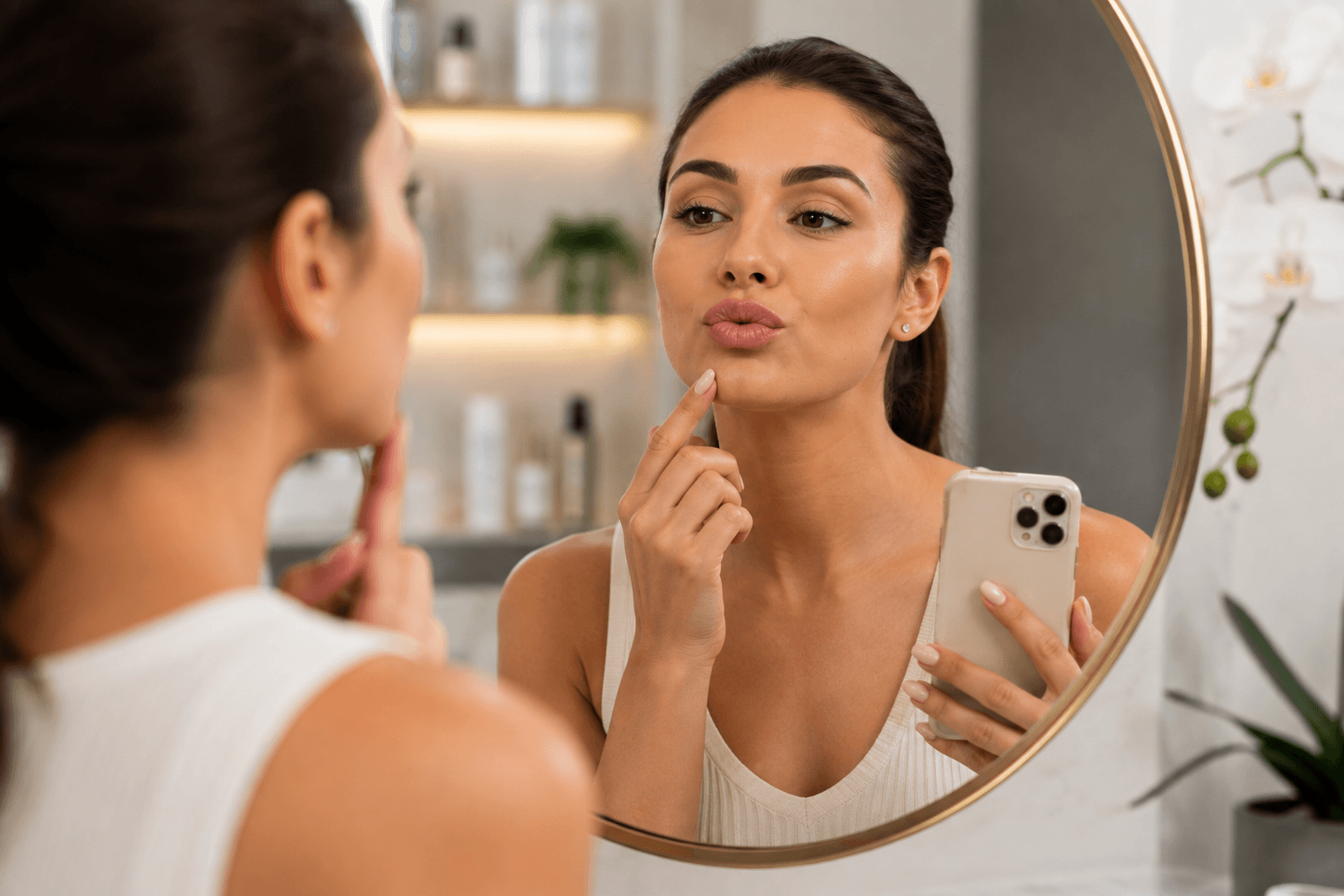
Somewhere along the way, "duck lips" became one of those phrases everyone uses but almost nobody can actually define. People point at a photo and say "that's duck lips" the same way they'd point at a bad haircut, but if you ask them why it looks that way, most can't explain it. That's not surprising. The look has more to do with facial proportion and injection placement than most people realize, and understanding it actually helps you avoid it entirely.
If you're searching "what are duck lips" because you're about to get filler for the first time, or because you had it done somewhere and something looks off, this is the breakdown that actually matters, not just the meme version.
What Are Duck Lips in Simple Terms?
Duck lips describe a specific look where the lips, usually the upper lip, appear flattened, overly projected outward, and disconnected from the rest of the face. Instead of the lips having natural curves and definition, they look like a single puffed shape with little distinction between the vermillion border, the cupid's bow, and the surrounding skin. The name comes from the resemblance to a duck's bill, a wide, flat protrusion rather than a natural lip shape.
It's worth separating this from simply having "big lips." Plenty of people have naturally full lips with excellent shape and proportion. Duck lips specifically refers to a loss of natural contour combined with excessive forward projection, which is almost always the result of how and where filler was placed.
What Causes the Duck Lip Look?
Is It About How Much Filler Was Used?
Volume is part of it, but it's not the whole story. You can actually add a significant amount of filler to lips and still preserve a natural shape if it's placed with attention to the underlying structure. Duck lips happen more from technique than from raw quantity.
Is It About Where the Filler Was Injected?
This is the bigger factor. When filler is injected primarily into the center of the lip, particularly the area right along the vermillion border, it tends to push the lip forward and outward rather than adding natural fullness. Skilled injectors distribute product across the whole lip, including the body and the corners, to maintain proportion instead of just projecting the center.
Does the Cupid's Bow and Philtrum Matter?
Yes, more than people expect. The cupid's bow, the natural double curve at the center of the upper lip, and the philtrum columns, the two vertical ridges leading up to the nose, are what give lips a natural, three dimensional look. When filler flattens or obscures these structures, the lip loses its definition and starts to look like one continuous puffed shape, which is the visual signature of duck lips.
Can Swelling Right After Filler Look Like Duck Lips Temporarily?
Yes, and this trips a lot of people up. It's completely normal for lips to look slightly overfilled or uneven in the first two to three days after treatment due to swelling. True duck lips are a shape and structure issue that persists once swelling resolves, not a temporary side effect.
Who Tends to End Up With This Look?
It's rarely about the client's anatomy and almost always about the approach taken during injection. That said, a few patterns come up often.
Overcorrection From Wanting Dramatic Results Fast
Some people ask for as much volume as possible in one session, which increases the risk of the lip losing its natural taper, especially if the injector doesn't push back on that request.
Repeated Touch Ups Without Reassessing the Whole Lip
Filler is often added session after session without dissolving or reassessing what's already there. Over time, product accumulates unevenly and gradually pushes the lip further from its original proportion.
Using the Wrong Filler Type for the Area
Not all dermal fillers behave the same way once injected. Some are stiffer and hold their shape more rigidly, which can look great in cheeks but overly structured in lips. Softer, more flexible fillers designed specifically for lips, like Restylane Kysse, tend to move naturally with facial expression instead of sitting stiffly.
How Do You Avoid Ending Up With Duck Lips?
Choose an Injector Who Talks About Proportion, Not Just Volume
During a consultation, a good injector should talk about your natural lip shape, your philtrum, and how much projection makes sense for your face, not just how many syringes you should buy.
Start Conservative, Especially the First Time
You can always add more filler later. You cannot instantly remove it without dissolving, which takes an additional appointment. Starting with a smaller amount and building up over a few sessions gives you more control over the final shape.
Ask to See Before and After Photos of Similar Lip Shapes
Every face is different, but a provider with a strong portfolio should be able to show you results on lips with a similar starting shape to yours.
What If You Already Have This Look?
If you're reading this because your lips already look flatter or more projected than you wanted, the good news is that it's correctable. Hyaluronic acid fillers, which is what most lip fillers are made from, can be dissolved with an enzyme called hyaluronidase, and the lip can be reassessed and re-treated with better distribution. At Amani MedSpa's St. Petersburg location, this kind of correction is one of the more common consultations we handle, and it usually starts with an honest look at what's currently there before deciding on next steps.
You can browse our dermal fillers and Restylane Kysse lip filler pages to see how we approach lip shaping, or head straight to our concerns page for St. Petersburg if you're not sure whether your concern is filler related or something else entirely.
Is There a Difference Between Duck Lips and a "Trout Pout"?
You may have heard both terms used somewhat interchangeably, and while they describe similar outcomes, there's a subtle distinction. "Trout pout" typically refers more broadly to any overfilled or unnatural looking lip result, while duck lips specifically describes the flattened, forward projecting shape caused by concentrated central filler placement. In practice, most people use the terms to mean the same thing, but understanding the more specific mechanism behind duck lips is what actually helps you and your injector avoid it.
Duck Lips Aren't a Life Sentence (Even If the Internet Makes It Feel That Way)
The internet has turned duck lips into a punchline, but the reality is much less dramatic. It's a fixable outcome of technique, not a permanent verdict on your face. Whether you're trying to avoid it before your first appointment or you're looking to correct something that already happened, the fix almost always comes down to finding an injector who treats your lips as a whole shape rather than a space to fill.
This guide was updated in August 2026 to reflect current lip filler practices in St. Petersburg, Florida.
Frequently Asked Questions
What are duck lips exactly? Duck lips is a term for an overfilled, flattened lip appearance where natural contours like the cupid's bow and philtrum are lost, usually caused by filler concentrated in the center of the lip rather than distributed evenly.
Are duck lips always caused by filler? Almost always, yes. It's an injection related outcome rather than a natural anatomical trait, though people with naturally fuller lips may notice it more quickly if filler is added without attention to shape.
Can duck lips go away on their own? If it's from filler, it will fade over time as the product breaks down naturally, which can take six months to a year depending on the type used. It can also be corrected sooner with a dissolving treatment.
Is it normal for lips to look overfilled right after an appointment? Yes, mild swelling in the first few days is common and not the same as true duck lips. Give it about two weeks before judging the final shape.
How can I make sure my injector avoids this look? Ask specifically how they plan to distribute filler across your lip, not just how much they're planning to use, and look at their previous work on lips with a similar shape to yours.